 By Mark
 Table of Content
In my 20-year career across Windows and Linux internals, I’ve often found myself explaining a concept that many find unsettling: the Illusion of Privilege. To the average user, a password prompt or a “permission denied” error feels like a solid steel door. But to a hacker, those doors are made of digital smoke.
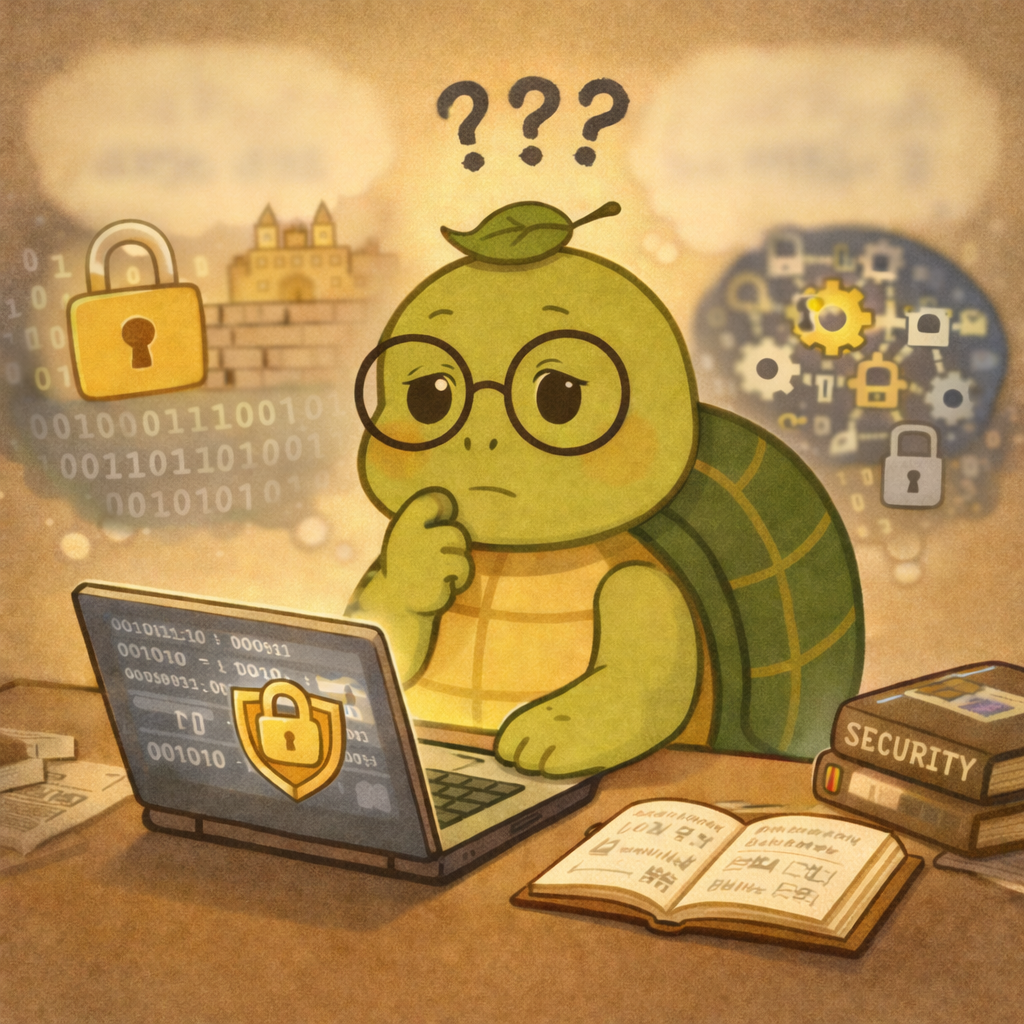
1. The Academic Bridge vs. The Hacker’s Gap
In university, we learn that System Calls are the secure boundary between the user and the kernel. We are taught to respect the hierarchy, believing that the OS is a vigilant god protecting its resources. However, when you begin to build commercial security products, you quickly realize that this hierarchy is often an Illusion of Privilege.
While a developer sees a System Call as a functional API, a security engineer sees it as a potential hook point. The “impenetrable wall” between a guest and a host is often just a single line of code that can be bypassed if you know where the logic falters.
2. The Anatomy of a Bit-Based Illusion
Why do I call it the Illusion of Privilege? Because when you fire up a kernel debugger, the “God-mode” of a Root user vanishes into a simple sequence of bits.
In the Windows EPROCESS or the Linux task_struct, your identity isn’t a badge; it’s a value in a memory address. If an exploit allows an attacker to write to kernel memory, they can flip a few bits—changing a User ID from 1000 to 0. Suddenly, the Illusion of Privilege is laid bare: the OS, which was just blocking your access, now treats you as the ultimate authority because a single number in memory changed.
3. Breaking the Spell: The Bash Example
To illustrate how easily the Illusion of Privilege can be shattered, consider the classic buffer overflow in a program like Bash.
Imagine a castle gatekeeper who follows a written manual. If a hacker can “overflow” a guest book with so much ink that it spills onto the manual, they can blot out the rule that says “Check ID” and write “Let everyone in.” In this moment, the gatekeeper’s authority becomes an Illusion of Privilege. The hacker hasn’t found a key; they have simply rewritten the logic that defined the gatekeeper’s power in the first place.
4. 2025: Defending an Illusion
As we move into 2025, modern operating systems use eBPF, VBS, and Zero Trust to reinforce these boundaries. Yet, the Illusion of Privilege remains a fundamental truth of software. No matter how many layers of virtualization or encryption we add, the system eventually boils down to a logical “Yes” or “No” stored in a volatile memory cell.
5. Want to Learn More? (Search Keywords)
If this deep dive into the “behind-the-scenes” of operating systems has sparked your curiosity, I encourage you to do your own research. You can find the actual code and structures I’ve mentioned by searching for the following keywords on Google:
- “Linux Credential Structure struct cred”: To see exactly how Linux stores UID and GID bits.
- “Windows EPROCESS Token manipulation”: To understand how Windows handles process permissions in memory.
- “Local Privilege Escalation (LPE) techniques”: To see real-world examples of how the illusion is shattered.
- “Kernel Exploit Development Tutorial”: For those who want to see the technical “how-to” of memory manipulation.
- “Virtualization-Based Security (VBS) architecture”: To learn how modern Windows versions try to make the illusion “physical” and unchangeable.
Searching for these will show you that the “bits” I’ve described aren’t just a theory—they are the very foundation of the device you are using right now.
6. Conclusion: The Power of Perspective
Once you accept the Illusion of Privilege, you stop being a passive user of the OS and start becoming its architect. You realize that true security isn’t about building a wall that “cannot be climbed,” but about understanding the bit-level logic that allows the wall to exist at all.
In my next post, I’ll share how I used my knowledge of this Illusion of Privilege to create Rootkits—not to destroy systems, but to understand how to build the most resilient security drivers the industry has ever seen.